
Our work in the following segment is in progress. Some findings may be inconclusive.

Performance Hardware.
Inclusive by Engineering.

Krass Gaming is developing performance-grade adaptive controller systems designed to expand competitive access without compromising precision.

Competitive gaming hardware is engineered around standardized ergonomics. However, grip strength, fine motor control, reach, and endurance vary significantly across players.

Existing accessibility controllers prioritize basic functionality — but rarely address competitive performance optimization.

This leaves a critical gap: Adaptive input systems capable of sustaining high-level competitive play.
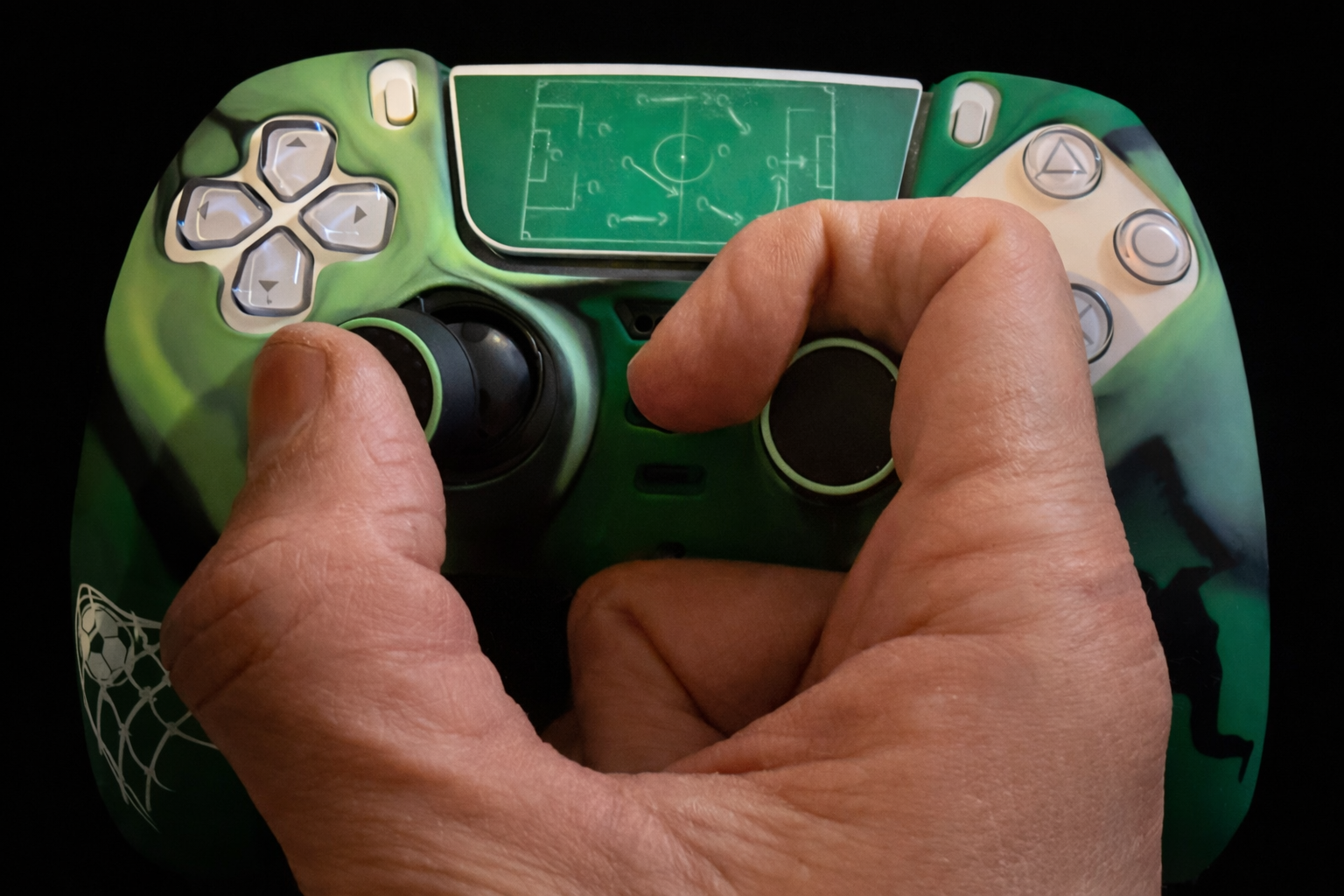
Engineering for Adaptive Play

Many players experience limitations not because of skill, but because standard controllers assume identical hand strength, reach, and motor control. Our engineering work explores how controller architecture can adapt to a wider range of physical capabilities. By modifying actuation forces, input positioning, and control geometry, we aim to design performance-grade hardware that expands competitive access.

Our
Foundation& Competence

Engineering Capability

Our approach integrates structural modeling, load distribution analysis, and component-level optimization to engineer durable and tunable controller architectures. Current technical competencies include:

• Trigger actuation force tuning
• Reinforced shell geometry
• Modular remap architecture

We also work with Artificial Intelligence (AI) and digitalisation to increase ergonomic accessibility.
  • TMR Joystick integration for drift resistance

    Great creations have excellent basis. For us, anti drift joysticks are the first step to make a quality engineering piece.

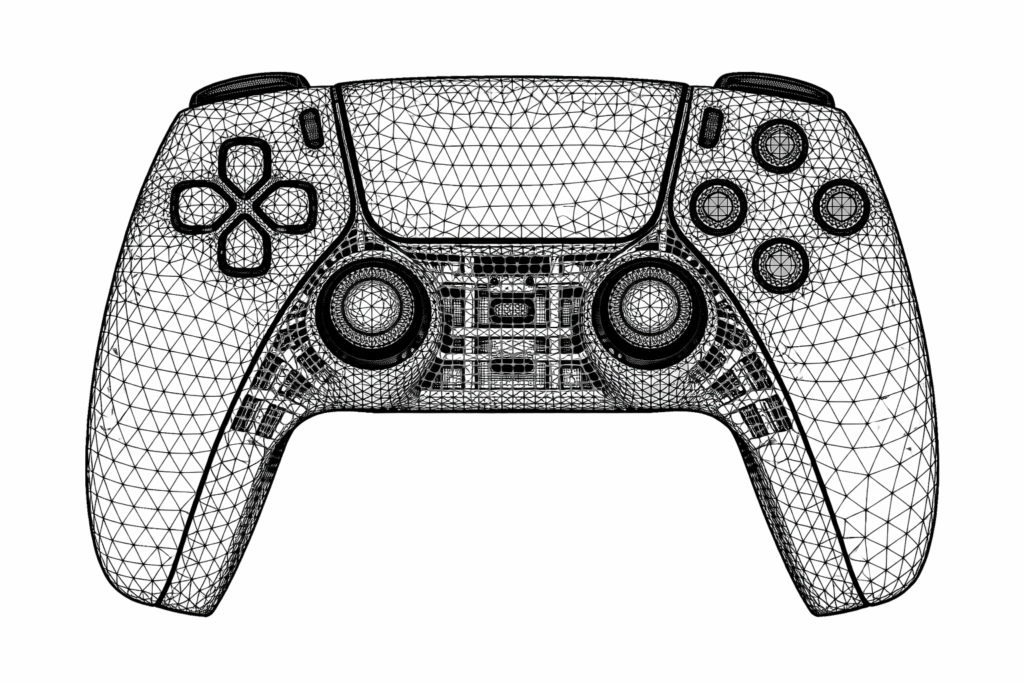
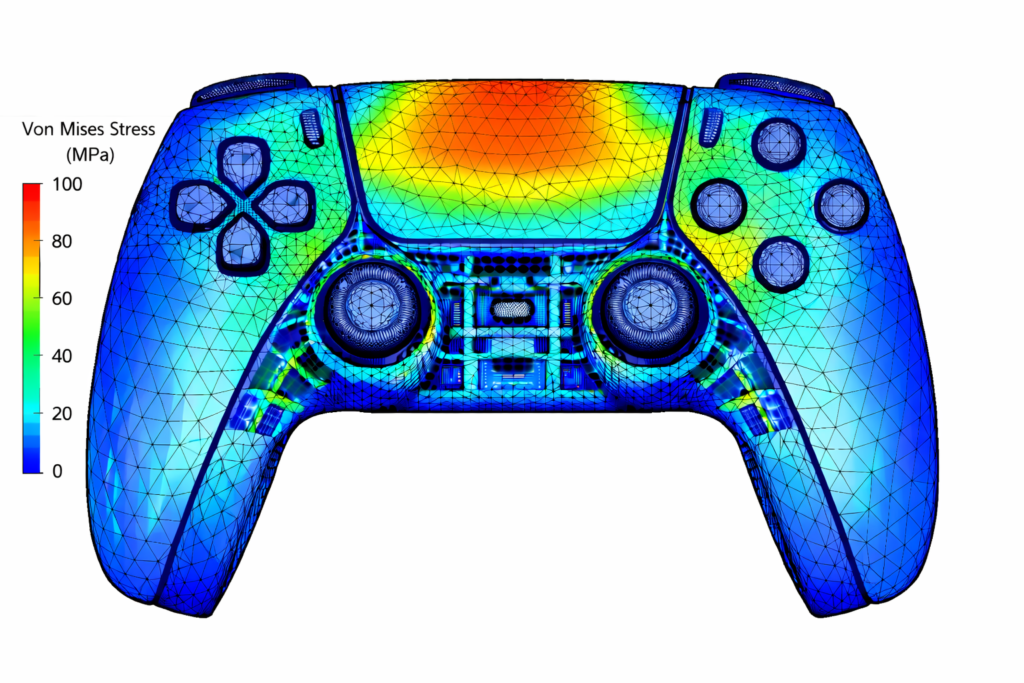
  • Digital structural modeling

    A digital model offers insight into what part of the prototype needs reinforcements and how it behaves under operations.

  • Trigger actuation force tuning

    Actuation force for a user may be too much while for another may be too little. Customisation of this force could improve game play for specific users and offer more opportunities.

  • Reinforced shell geometry

    As you see further in this page, user stress and use of the controllers can impact the structural integrity of the housing and the sensitive components. This can result in fatigue cracks or button malfunction or trigger fault.

  • Modular remap architecture

    To be able to separate operational segments in game play controllers need to allow for redistribution of command points and thats where remap architecture come quite handy.

Conceptual structural modeling used to evaluate stress distribution across the controller shell.
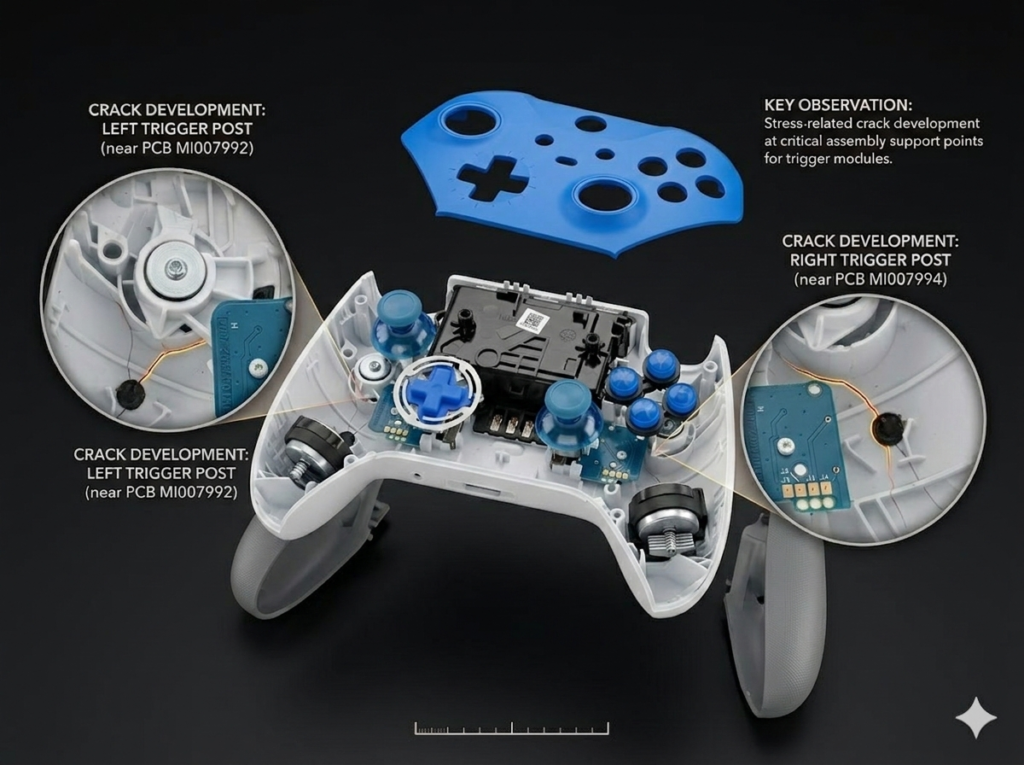
Fatigue cracks in real life beacuse of cyclic loads

Every design decision influences durability, weight distribution, and stress concentration. Competitive gameplay introduces repeated load cycles across joysticks, triggers, and shell contact points.

We use digital modeling to evaluate how structural geometry distributes load during high-pressure gameplay scenarios. This allows us to identify high-stress regions and reinforce critical zones before physical modification.

  • TMR Joysticks: TMR is the best solution that is out there right now to tackles stick drift.
  • Shell designs that make you say: yep, that's me! ; So you now have a choice beyond ordinary.
  • Extras like responsive clicky buttons, state-of-the-art remap, LED lights...the list goes on. Of course, more features means more cost.

Internal Component Engineering

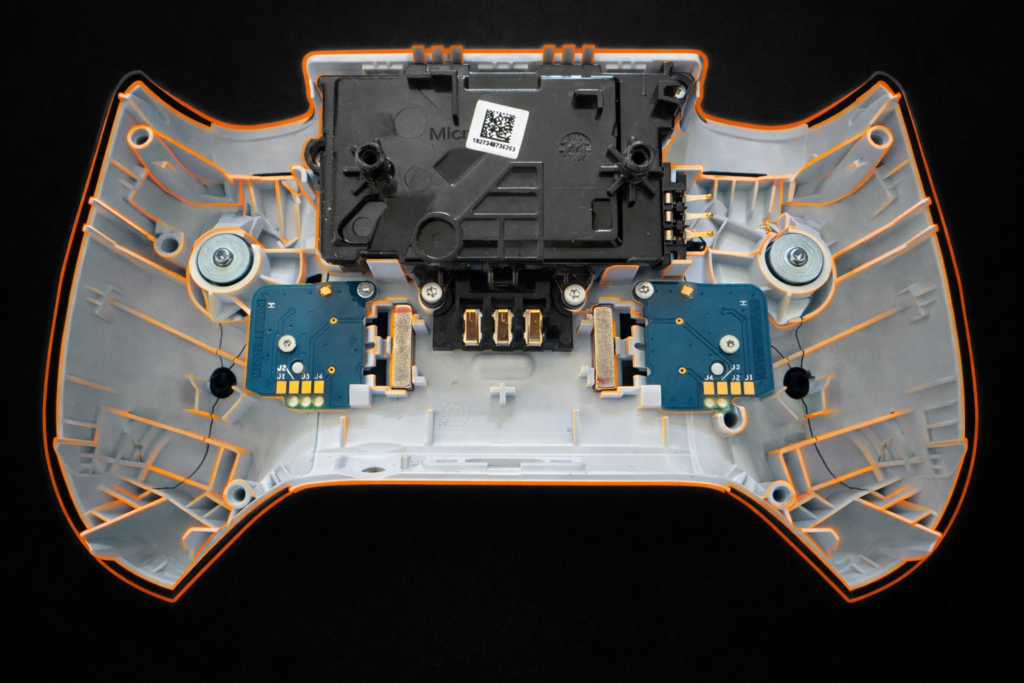
High performance begins internally. We replace failure-prone components with higher durability alternatives and calibrate each controller for consistency under sustained competitive use. Focus areas include: • TMR joystick integration for drift resistance • Trigger response calibration • Reinforced internal support points • Power efficiency optimization • Remap architecture design

Conceptual structural modeling used to evaluate stress distribution across the controller shell.

  • TMR Joysticks: TMR is the best solution that is out there right now to tackles stick drift.
  • Shell designs that make you say: yep, that's me! ; So you now have a choice beyond ordinary.
  • Extras like responsive clicky buttons, state-of-the-art remap, LED lights...the list goes on. Of course, more features means more cost.

Fatigue cracks in real life beacuse of vibrations

Adaptive Control Research & Accessibility

Not every gamer interacts with hardware in the same way. Grip strength, finger mobility, reach, and endurance vary — yet most controllers are built around a single ergonomic standard. We are actively researching alternative control configurations designed to expand access without sacrificing competitive performance. Current research directions include: • Reduced trigger actuation force • Repositioned or enlarged input surfaces • Alternative grip geometry • External switch integration compatibility • Customizable input mapping structures

We are currently collaborating with players to better understand real-world accessibility requirements and engineer targeted solutions.

  • TMR Joysticks: TMR is the best solution that is out there right now to tackles stick drift.
  • Shell designs that make you say: yep, that's me! ; So you now have a choice beyond ordinary.
  • Extras like responsive clicky buttons, state-of-the-art remap, LED lights...the list goes on. Of course, more features means more cost.

Fatigue cracks in real life beacuse of vibrations